 By AdmissionGuru
Study Abroad
Studying in the Netherlands in English in 2025: Your Comprehensive Guide
Discover why the Netherlands is a top choice for international students and how to navigate your academic journey.
Published: December 18, 2026
By: Sarah Johnson
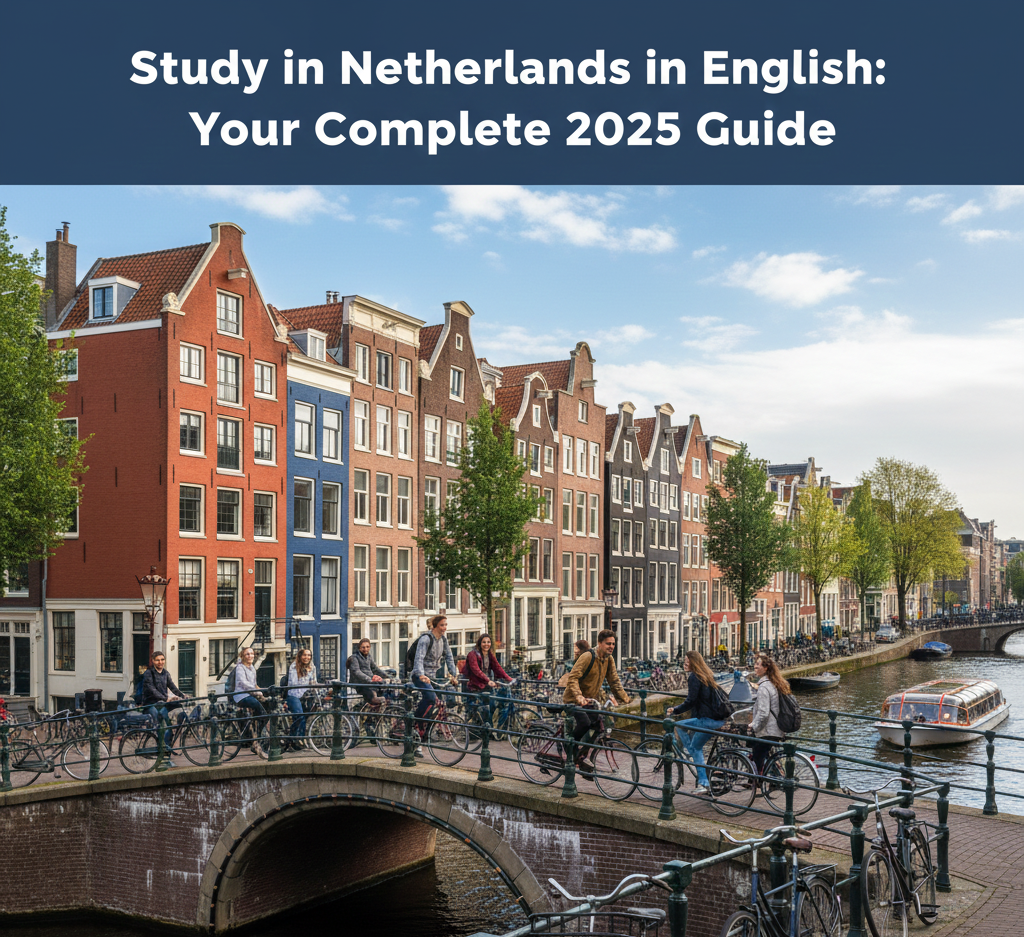
The Netherlands has emerged as one of Europe’s most popular destinations for international students—and for good reason. With over 2,200 programs taught entirely in English, world-class universities consistently ranking in the global top 100, and a vibrant student culture, studying in the Netherlands offers an unparalleled educational experience. Whether you’re considering a bachelor’s or master’s degree, this comprehensive guide covers everything you need to know about studying in the Netherlands in English in 2025.
More than 122,000 international students currently pursue their education in Dutch universities, drawn by the country’s innovative teaching methods, affordable tuition compared to the US and UK, and the unique Dutch approach to learning that emphasizes collaboration and critical thinking. If you’re wondering whether the Netherlands is the right destination for your studies, you’ve come to the right place.
In this guide, we’ll explore why the Netherlands stands out among study destinations, detail the English-taught programs available, break down costs and scholarships, explain visa requirements, and provide insider tips for thriving as an international student in Holland. By the end, you’ll have a clear roadmap to start your Dutch education journey.
Table of Contents
- Why Study in Netherlands in English?
- Types of English-Taught Programs Available
- Top Netherlands Universities for International Students
- Tuition Fees and Living Costs
- Scholarships and Financial Aid
- Student Visa Requirements and Application Process
- Best Student Cities in Netherlands
- How to Apply to Dutch Universities
- Student Life and Working While Studying
- Career Opportunities After Graduation
- Frequently Asked Questions
Why Study in Netherlands in English?
The Netherlands pioneered non-English-speaking countries offering complete degree programs in English. Today, it remains the European leader with the most extensive selection of English-taught courses. Here’s why thousands of students choose to study in the Netherlands each year.
World-Class Education System
Dutch universities consistently rank among the world’s best. The 2025 QS World University Rankings feature 13 Dutch universities in the top 200, with institutions like the University of Amsterdam (ranked 65th), Delft University of Technology (ranked 57th), and Utrecht University making the top 100. The Netherlands’ higher education system ranks 7th globally according to Universitas21, reflecting its commitment to quality research and innovative teaching.
The Dutch education approach differs significantly from traditional lecture-based learning. Universities emphasize student-centered education, encouraging active participation, group work, and practical problem-solving. You won’t spend your time passively taking notes—expect to engage in lively discussions, collaborative projects, and hands-on research from day one.
English Proficiency
Here’s a game-changer: approximately 95% of Dutch people speak fluent English, ranking the Netherlands as one of the most English-proficient non-native-speaking countries globally. This means you can comfortably navigate daily life, communicate with locals, and immerse yourself in Dutch culture without mastering Dutch first. Most university services, student organizations, and social activities operate in English, making your transition smooth and stress-free.
Affordable Compared to Other Destinations
While studying abroad can be expensive, the Netherlands offers competitive tuition rates compared to the US, UK, and Australia. EU/EEA students pay statutory tuition fees of €2,601 per year (2025-2026 academic year), while international students typically pay between €9,000 and €20,000 annually—significantly less than comparable programs in English-speaking countries.
Strategic European Location
Located in the heart of Europe, the Netherlands provides easy access to neighboring countries. Weekend trips to Paris, Berlin, London, or Brussels are simple and affordable thanks to excellent train connections and budget airlines. This geographic advantage transforms your study experience into a broader European adventure.
Innovative and Practical Learning
Dutch universities focus on equipping you with practical skills valued in the global job market. The curriculum often includes internships, industry collaborations, and real-world projects. This approach explains why Netherlands graduates are highly sought after by international employers.
💡
Pro Tip
The Netherlands ranks 21st on the Global Peace Index, making it one of the safest countries in the world for international students. You can explore cities freely, even late at night.
Types of English-Taught Programs Available
The Netherlands offers an impressive range of English-taught programs across all academic levels. Understanding what’s available helps you find the perfect fit for your educational goals.
Bachelor’s Programs
Over 400 bachelor’s programs are taught entirely in English at Dutch universities. These three-year programs (180 ECTS credits) cover diverse fields including:
- Business Administration and Economics
- Computer Science and Information Technology
- Engineering (Mechanical, Electrical, Civil, Aerospace)
- International Relations and Political Science
- Psychology and Social Sciences
- Environmental Science and Sustainability
- Media and Communication Studies
- Arts and Design
Popular institutions like the University of Amsterdam, Erasmus University Rotterdam, and Maastricht University offer extensive bachelor’s options for international students.
Master’s Programs
The Netherlands truly shines at the master’s level, with over 1,000 programs taught in English. These one-year (60 ECTS) or two-year (120 ECTS) programs attract students worldwide for their specialized focus and research opportunities.
Top master’s programs include:
- Data Science and Artificial Intelligence
- Sustainable Energy and Water Management
- International Business and Finance
- Law and Human Rights
- Biomedical Sciences and Public Health
- Urban Planning and Architecture
Master’s students benefit from close supervision in small groups and extensive research opportunities at world-leading facilities.
Research Master’s and PhD Programs
For students pursuing academic careers, Dutch universities offer research-intensive master’s programs (typically two years) and PhD opportunities with competitive stipends. The collaborative research environment and funding opportunities make the Netherlands attractive for doctoral students.
Short-Term Programs and Summer Schools
If you’re not ready for a full degree, consider short-term options. Many Dutch universities offer:
- Summer schools (2-6 weeks)
- Exchange semesters
- Professional development courses
- Dutch language preparatory programs
These programs provide a taste of Dutch education and can help you decide if a full degree program is right for you.
Key Takeaway
-
✅
The Netherlands offers 2,200+ English-taught programs—the highest number in continental Europe—ensuring you’ll find options matching your academic interests regardless of your field.
Top Netherlands Universities for International Students
Choosing the right university significantly impacts your educational experience. Here are the leading Dutch universities welcoming international students in 2025.
University of Amsterdam (UvA)
Ranked 65th globally, UvA is the Netherlands’ largest university with approximately 40,000 students. It excels in humanities, social sciences, business, and law. The university’s central Amsterdam location provides unmatched cultural immersion and networking opportunities.
Delft University of Technology (TU Delft)
TU Delft ranks 57th worldwide and specializes in engineering, technology, and applied sciences. It’s the oldest and largest Dutch technical university, known for groundbreaking research in sustainable energy, water management, and aerospace engineering. The university maintains strong industry partnerships with companies like ASML and Shell.
Utrecht University
This prestigious research university ranks in the global top 100, offering 90+ master’s programs and 12 bachelor’s programs in English. Utrecht particularly excels in life sciences, humanities, and social sciences. The city’s central location and student-friendly atmosphere make it a top choice.
Erasmus University Rotterdam
Famous for its Rotterdam School of Management (one of Europe’s best business schools), Erasmus University specializes in economics, business, medicine, and social sciences. The university’s modern campus and strong industry connections provide excellent career opportunities.
Leiden University
Founded in 1575, Leiden University is the oldest in the Netherlands and renowned for law, humanities, and social sciences programs. The historic campus and intimate city setting appeal to students seeking a traditional university experience.
University of Groningen
Ranked in the top 80 globally, Groningen boasts a remarkable history—it hired the Netherlands’ first female lecturer in 1917. With students comprising 25% of the city’s population, Groningen offers an authentic student city experience with affordable living costs.
Wageningen University & Research
For students interested in agriculture, food sciences, and environmental studies, Wageningen is the world’s leading institution. Its practical research approach and sustainability focus attract environmentally conscious students globally.
Eindhoven University of Technology
Located in the Netherlands’ innovation hub, TU Eindhoven specializes in engineering and technology with strong ties to the high-tech industry. The city offers excellent internship and employment opportunities in cutting-edge companies.
💡
Pro Tip
Research universities focus on theoretical knowledge and academic research, while Universities of Applied Sciences (UAS) emphasize practical, career-oriented education. Both offer quality programs—choose based on your learning style and career goals.
Tuition Fees and Living Costs
Understanding the financial commitment helps you plan effectively. The Netherlands offers relatively affordable education compared to other popular study destinations, though costs vary based on your nationality and program choice.
Tuition Fees for International Students
EU/EEA and Swiss Students:
- Statutory tuition fee: €2,601 per year (2025-2026 academic year)
- This government-subsidized rate applies to both bachelor’s and master’s programs
- Represents exceptional value for high-quality education
Non-EU/EEA International Students:
- Bachelor’s programs: €9,000 to €17,000 per year
- Master’s programs: €14,000 to €22,000 per year
- Specialized programs (Medicine, Dentistry, MBA): €20,000 to €40,000 per year
- Technical programs: typically €12,000 to €15,000 per year
Universities of Applied Sciences generally charge lower fees than research universities. Top-ranked institutions typically charge higher tuition, but the quality justifies the investment.
Living Costs
Beyond tuition, you’ll need approximately €900 to €1,400 per month for living expenses. Here’s a breakdown:
€350 – €900
Accommodation
€200 – €300
Food and Groceries
€50 – €100
Transportation
€100 – €120
Health Insurance
€50 – €100
Books and Study Materials
€150 – €300
Personal Expenses and Entertainment
Cooking at home significantly reduces costs. Student discounts at restaurants and cafés help when eating out.
Most students cycle everywhere—the Netherlands’ excellent bike infrastructure makes car ownership unnecessary. Public transport student discounts further reduce costs.
Mandatory for all students. Shop around for the best rates that suit your needs.
Many resources are available digitally or through university libraries.
Student discounts on entertainment, museums, and cultural activities help stretch your budget.
Total Annual Living Costs: €10,800 to €16,800 per year
Proof of Financial Means: For visa purposes, international students must demonstrate they have €13,129.44 (€1,094.12 × 12 months) to cover living expenses.
⚠️
Important
Start your housing search immediately upon acceptance. Student accommodation in popular cities like Amsterdam and Utrecht is highly competitive, and early applications significantly improve your chances.
Scholarships and Financial Aid
Several scholarship opportunities can significantly reduce your financial burden when studying in the Netherlands.
Holland Scholarship
This government-funded scholarship provides €5,000 to non-EU/EEA students. It’s a one-time grant for the first year of bachelor’s or master’s programs. Eligibility requirements:
- Non-EU/EEA nationality
- First-time student in the Netherlands
- Meeting the university’s application requirements
- Apply through participating institutions
Over 60 Dutch institutions participate in this program, making it one of the most accessible funding options.
Orange Knowledge Programme (OKP)
Administered by Nuffic, OKP targets professionals from specific countries pursuing short courses or master’s degrees in the Netherlands. The program focuses on development-relevant fields and covers tuition, travel, living expenses, and insurance.
Erasmus+ Programme
EU students can access Erasmus+ funding for exchange semesters or full degrees in the Netherlands. The program provides grants covering part of your living costs and travel expenses.
University-Specific Scholarships
Many Dutch universities offer their own scholarship programs:
- Amsterdam Merit Scholarship (UvA): €6,000 to €25,000 per year for exceptional non-EEA master’s students
- University of Twente Scholarship: Covers full tuition plus living expenses for outstanding master’s students
- Leiden University Excellence Scholarship: €10,000 to €15,000 per year for high-achieving non-EU/EEA master’s students
- TU Delft Excellence Scholarship: Full coverage of tuition and living costs for top-performing master’s applicants
External Funding Organizations
Organizations like Nuffic, Fulbright, and various national governments offer scholarships for students pursuing education in the Netherlands. Research opportunities specific to your home country.
💡
Pro Tip
Apply for multiple scholarships simultaneously to maximize your chances. Scholarship deadlines often occur months before program start dates, so plan ahead and prepare strong applications highlighting your academic achievements and motivation.
Student Visa Requirements and Application Process
Understanding visa requirements ensures a smooth transition to studying in the Netherlands. Requirements differ based on your nationality and study duration.
Who Needs a Visa?
No Visa Required:
- EU/EEA citizens
- Swiss nationals
- Surinamese nationals (specific conditions apply)
These students only need to register with local municipalities upon arrival.
Visa Required:
All other international students need:
- MVV (Machtiging tot Voorlopig Verblijf): Provisional residence permit allowing entry to the Netherlands
- VVR (Verblijfsvergunning): Residence permit for staying longer than 90 days
The good news? Your university typically handles both applications simultaneously through the Entry and Residence (TEV) procedure.
Visa Requirements and Documents
To obtain your student visa, you must provide:
Academic Documents:
- Official admission letter from a recognized Dutch institution
- Previous academic transcripts and diplomas (translated and legalized)
- Proof of English proficiency (IELTS 6.0-6.5, TOEFL iBT 80-90, or equivalent)
Financial Documentation:
- Bank statements showing €13,129.44 for 12 months
- Scholarship letters (if applicable)
- Proof of tuition payment or payment plan
Personal Documents:
- Valid passport (at least 12 months validity from application date)
- Passport-sized photographs
- Health insurance covering at least three months initially
Additional Requirements:
- Tuberculosis declaration (depending on country of origin)
- Medical examination certificate (some cases)
- Completed visa application forms
Application Process
1
Step 1: Secure University Admission
Apply to Dutch universities and receive an official acceptance letter. Start this process 6-12 months before your intended start date.
2
Step 2: University Initiates Visa Application
Your institution acts as your sponsor and submits your MVV and residence permit applications to the Dutch Immigration and Naturalisation Service (IND). You cannot apply independently—the university must handle this.
3
Step 3: Provide Required Documents
Submit all required documents to your university within their specified timeframe. Missing documents delay processing.
4
Step 4: Pay Application Fees
The combined MVV and residence permit fee is €311 (non-refundable). Some universities include this in enrollment fees.
5
Step 5: Await Processing
Processing typically takes 2-4 weeks but can extend to 3 months. The IND sends the approved MVV to your chosen Dutch embassy or consulate.
6
Step 6: Collect Your MVV
Pick up your entry visa from the designated embassy. This 90-day visa allows you to enter the Netherlands.
7
Step 7: Obtain Residence Permit
Within 3-5 days of arriving in the Netherlands, collect your residence permit card from the IND. This card allows you to legally study and reside in the country for your program’s duration (up to 5 years).
8
Step 8: Register with Municipality
Register at your local municipality (gemeente) within five days of arrival to receive your BSN (Burgerservicenummer)—your Dutch social security number required for healthcare, banking, and more.
Academic Progress Requirements
To maintain your residence permit, you must achieve satisfactory academic progress—typically earning at least 50% of required credits each year. Dutch universities take this seriously, so stay on top of your studies.
Success Rate: The Netherlands maintains a student visa approval rate of 90-98%, among the highest globally. Proper preparation and complete documentation virtually guarantee approval.
⚠️
Important
Apply for your visa as early as possible—ideally 3-4 months before your program starts. While processing usually takes 2-4 weeks, delays can occur, and you don’t want to miss your start date.
Best Student Cities in Netherlands
Choosing where to study significantly impacts your experience. Each Dutch city offers unique characteristics, from bustling metropolises to charming historic towns.
Amsterdam
The capital city tops most students’ lists for its iconic canals, world-class museums, and vibrant international community. Home to the University of Amsterdam and Vrije Universiteit Amsterdam, both ranking globally, Amsterdam offers unparalleled cultural experiences.
Pros:
- Thriving international atmosphere
- Excellent public transportation
- Countless cultural attractions and festivals
- Diverse job opportunities
Cons:
- Highest living costs (€600–€900/month rent)
- Very competitive housing market
- Can feel touristy in central areas
Best For: Students seeking maximum cultural diversity and urban excitement who can manage higher costs.
Utrecht
Consistently ranked among the best student cities globally, Utrecht combines historic charm with modern amenities. The city center maintains its medieval character while offering contemporary student life.
Pros:
- Central Netherlands location
- 4th safest city in the country
- Excellent work-life balance
- More affordable than Amsterdam (€400–€700/month rent)
- Utrecht University ranks top 100 globally
Cons:
- Smaller than Amsterdam
- Housing still competitive
Best For: Students wanting a perfect blend of history, safety, and vibrant student culture without Amsterdam’s intensity.
Rotterdam
The Netherlands’ second-largest city stands out for its modern architecture and multicultural atmosphere. Rotterdam rebuilt after WWII, creating a strikingly contemporary cityscape.
Pros:
- Most affordable major city (€400–€700/month rent)
- Europe’s largest port creates diverse job opportunities
- Dynamic, forward-thinking atmosphere
- Erasmus University Rotterdam excels in business and economics
Cons:
- Less “traditionally Dutch” character
- Weather can feel grayer due to industrial elements
Best For: Students interested in business, logistics, or modern urban environments who prioritize affordability.
Groningen
This northern city defines “student city”—students comprise 25% of the population. The University of Groningen, founded in 1614, creates an authentic academic atmosphere.
Pros:
- Most affordable living costs (€350–€600/month rent)
- Vibrant student nightlife and culture
- Safe, bike-friendly environment
- Strong international community despite smaller size
Cons:
- More remote location
- Fewer direct international connections
- Winter weather can be harsh
Best For: Students seeking authentic student city life, tight-knit communities, and budget-friendly living.
Leiden
The Netherlands’ oldest city (home to Leiden University since 1575) offers classic Dutch charm with picturesque canals and historic architecture.
Pros:
- Intimate, traditional university atmosphere
- Rich academic history
- Close to Amsterdam, The Hague, and the beach
- Excellent for law, humanities, and social sciences
Cons:
- Smaller city with fewer amenities
- Limited nightlife compared to larger cities
- Tourist crowds during peak seasons
Best For: Students preferring traditional academic environments and classic Dutch culture.
Delft
This small city between Rotterdam and The Hague houses TU Delft, the top technical university. Delft combines engineering excellence with historic beauty.
Pros:
- World-class engineering education
- Strong industry connections (ASML, Shell)
- Charming historic center
- Close-knit student community
Cons:
- Limited outside engineering/technical fields
- Small city size
- Housing challenges despite smaller population
Best For: Engineering and technology students seeking top-tier technical education in an intimate setting.
Eindhoven
The Netherlands’ innovation capital hosts TU Eindhoven and numerous high-tech companies. The city offers cutting-edge opportunities in technology and design.
Pros:
- Excellent internship opportunities in tech sector
- Affordable (€350–€650/month rent)
- Modern, innovation-focused atmosphere
- Strong job prospects after graduation
Cons:
- Less scenic than other Dutch cities
- Smaller international community
- Focus heavily on tech/engineering
Best For: Engineering and technology students wanting direct industry exposure and career connections.
The Hague
The political capital houses the International Court of Justice, numerous embassies, and international organizations.
Pros:
- Unique international political atmosphere
- Proximity to beach
- Diverse, multicultural environment
- Excellent for international law and relations
Cons:
- Higher living costs
- More formal, less student-focused than other cities
Best For: Students interested in international law, politics, or diplomacy who want exposure to global governance.
💡
Pro Tip
Visit your potential cities if possible before deciding. Each has a distinct personality, and personal experience helps you determine the best fit. Many universities offer virtual tours and can connect you with current international students for insights.
How to Apply to Dutch Universities
Navigating the application process efficiently increases your chances of admission. Here’s your step-by-step guide.
Application Timeline
- 12-18 Months Before: Research programs and universities
- 10-12 Months Before: Prepare for English proficiency tests
- 6-9 Months Before: Submit applications (deadlines vary)
- 3-6 Months Before: Receive admission decisions
- 2-4 Months Before: Apply for visa/residence permit
- 1-2 Months Before: Arrange housing and travel
Application Methods
Dutch universities use two primary application systems:
- Studielink: The national online application portal used by most public universities for Dutch students and some international programs. You’ll create an account, select programs, and submit applications through this centralized system.
- Direct Application: Many programs require applying directly through the university’s website, particularly for international students. Check each university’s requirements carefully.
Some programs require both methods—apply through Studielink AND submit additional materials directly to the university.
Required Application Materials
Academic Documents:
- Certified copies of diplomas and transcripts
- Translation to English, Dutch, French, or German by certified translator
- Academic reference letters (usually 2-3)
Language Proficiency:
- IELTS: minimum 6.0-6.5 overall
- TOEFL iBT: minimum 80-90
- Cambridge English: C1 Advanced or C2 Proficiency
- Some universities accept English-taught previous education as proof
Motivation Letter:
Write a compelling 500-750 word letter explaining:
- Why this specific program interests you
- How it aligns with your career goals
- What unique perspective you bring
- Why this particular university appeals to you
CV/Resume:
Detail your academic achievements, relevant experience, extracurricular activities, and skills.
Portfolio (if applicable):
Art, design, and architecture programs require portfolios showcasing your work.
Entrance Exams:
Some programs require SAT, ACT, GMAT, or GRE scores. Check specific requirements.
Numerus Fixus Programs
Popular programs with limited capacity use numerus fixus—a lottery or selection system. These include psychology, medicine, and some business programs. Apply early and prepare strong materials, as admission is highly competitive.
Application Fees
Most universities charge €75-€100 application fees per program. Some waive fees for students from certain countries or economic backgrounds.
After Admission
- Accept your offer within the deadline
- Pay tuition deposit (if required)
- Submit visa documents through your university
- Start housing search immediately
- Arrange health insurance
- Book travel
Key Takeaway
-
✅
Start early, maintain organized records of all documents, and never miss deadlines. Dutch universities process thousands of international applications—professionalism and completeness matter.
Student Life and Working While Studying
Life in the Netherlands extends far beyond academics. Understanding student culture and work opportunities helps you thrive.
Dutch Student Culture
Dutch students embrace an informal, collaborative approach to learning. Expect professors to encourage debate, question their arguments, and engage actively in class. The Dutch education system values independent thinking and practical problem-solving over memorization.
Student Associations: Most Dutch universities feature active student associations (verenigingen) organizing social events, sports, cultural activities, and parties. Joining associations helps you build networks and integrate into student life quickly.
Cycling Culture: Bicycles dominate Dutch transportation. You’ll likely need a bike (€50-€150 secondhand) for daily commuting. The Netherlands offers over 35,000 kilometers of dedicated bike paths, making cycling safe and efficient.
Work-Life Balance: The Dutch prioritize balance. While academics are important, students enjoy active social lives, travel weekends, and part-time work without stigma.
Working Part-Time
International students can work while studying, though regulations vary by nationality.
EU/EEA Students:
- Work unlimited hours without restrictions
- Same labor rights as Dutch citizens
- No work permit required
Non-EU/EEA Students:
- Work maximum 16 hours per week during term time
- Work full-time during June, July, and August
- Employer must obtain TWV (work permit)
- Work permit usually free through your university
New for 2025: STEM students at top universities can work up to 24 hours per week, recognizing the practical nature of technical education.
Typical Wages: €8-€12 per hour for student jobs in retail, hospitality, tutoring, or campus positions. Higher rates possible for specialized skills.
Popular Student Jobs:
- Retail and sales
- Hospitality (restaurants, cafés)
- Campus jobs (library, administration)
- Tutoring and teaching assistance
- Content creation and translation
- IT and technical support
💡
Pro Tip
Start your job search through university career services, which often post student-friendly positions. Networking through student associations also uncovers opportunities not advertised publicly.
Social and Cultural Life
The Netherlands offers rich cultural experiences beyond campus:
- Museums: Student discounts make exploring world-class museums affordable. Amsterdam alone houses the Van Gogh Museum, Rijksmuseum, and Anne Frank House.
- Festivals: From King’s Day (April 27) to countless music festivals, the Netherlands loves celebrations. Most cities host annual events showcasing music, art, and culture.
- Travel: Your location enables easy European exploration. Weekend trips to neighboring countries are common and affordable via budget airlines and trains.
- Sports: Universities offer extensive sports facilities and clubs at student rates. From football to rowing, you’ll find options matching your interests.
International Community: With students from over 160 countries, you’ll build a truly global network. International student organizations provide support and organize cultural exchange events.
Healthcare and Insurance
All students must have health insurance coverage. EU students can use their European Health Insurance Card (EHIC) temporarily, but most eventually switch to Dutch insurance (€100-€120/month). Non-EU students must purchase Dutch health insurance upon arrival.
Dutch healthcare quality is excellent. Register with a general practitioner (huisarts) near your residence for primary care needs.
Career Opportunities After Graduation
The Netherlands actively supports international graduates transitioning from student to professional life.
Orientation Year Visa
Graduates from Dutch universities automatically qualify for the Orientation Year (Zoekjaar) residence permit, allowing you to:
- Stay in the Netherlands for one year after graduation
- Search for employment freely
- Work without restrictions
- Start your own business
- Switch to a work permit if you find employment
Eligibility: All international students graduating from recognized Dutch institutions qualify. You can apply up to three years after graduation, enabling travel or work in your home country before returning.
Job Market Prospects
The Netherlands offers excellent career opportunities, particularly in:
High-Demand Sectors:
- Information Technology and Software Development
- Engineering (especially sustainable energy and water management)
- Finance and Banking
- International Business and Trade
- Logistics and Supply Chain Management
- Healthcare and Life Sciences
- Agriculture and Food Technology
Language Requirements: Many international companies operate in English, especially in Amsterdam, Rotterdam, and Eindhoven. However, learning Dutch significantly expands opportunities and demonstrates commitment to integrating into Dutch society.
Average Salaries: Entry-level positions for graduates typically range from €2,500-€3,500 per month, with technical and finance roles often offering higher starting salaries.
Path to Permanent Residence
After living legally in the Netherlands for five years (including study time), you become eligible for permanent residence. This pathway makes the Netherlands attractive for students considering long-term European settlement.
💡
Pro Tip
Build professional networks during your studies through internships, student associations, and university career events. Many graduates secure jobs through connections made during their program rather than through traditional applications.
Frequently Asked Questions
Do I need to speak Dutch to study in the Netherlands?
+
No, you don’t need Dutch for English-taught programs. With 2,200+ programs taught entirely in English and 95% of Dutch people speaking fluent English, you can complete your degree and manage daily life comfortably without speaking Dutch. However, learning basic Dutch phrases enhances your experience and shows respect for local culture. Many universities offer free or low-cost Dutch language courses for international students.
How competitive is admission to Dutch universities?
+
Admission competitiveness varies by program. Generally, Dutch universities maintain more accessible entry requirements than UK or US institutions while still maintaining high standards. Bachelor’s programs typically require strong high school grades and English proficiency. Master’s programs emphasize relevant bachelor’s degrees and academic performance. Numerus fixus programs (psychology, medicine, some business programs) are highly competitive with limited spots. Overall acceptance rates hover around 60-70% for most programs, though top universities and specific programs may be more selective.
Can I work in the Netherlands after graduation?
+
Yes! All international graduates receive automatic eligibility for the Orientation Year visa, allowing you to stay one year after graduation to find employment. During this year, you can work without restrictions. If you secure a job, you can transition to a work permit and eventually permanent residence. The Netherlands actively wants international graduates to remain and contribute to the economy, making the transition from student to professional relatively straightforward.
Is student housing guaranteed in the Netherlands?
+
No, housing is not automatically guaranteed, and finding accommodation is one of the biggest challenges for international students, especially in Amsterdam and Utrecht. Some universities offer guaranteed housing for first-year international students, but this isn’t universal. Start your housing search immediately upon acceptance—preferably 3-6 months before arrival. Use reputable platforms like Kamernet, HousingAnywhere, and SSH Netherlands. University housing offices can guide you, and some offer emergency accommodation if you arrive without housing.
What’s the minimum IELTS score required for admission?
+
Most Dutch universities require IELTS scores of 6.0-6.5 overall, with some programs requiring minimum scores in specific sections. Top universities and competitive programs may require 6.5-7.0. Alternative tests include TOEFL iBT (80-90 minimum) or Cambridge English (C1 Advanced). Some universities waive English requirements if you completed previous education in English-medium instruction. Always check specific program requirements, as they vary significantly.
How much money do I need to prove for a student visa?
+
Non-EU/EEA students must demonstrate €13,129.44 (approximately €1,094.12 per month for 12 months) in accessible funds to obtain a residence permit. This amount covers living expenses but not tuition. You can prove financial means through personal bank statements, scholarship letters, or sponsor declarations. Some universities may require slightly higher amounts (around €13,200) to cover currency exchange variations. This financial requirement updates annually, so verify current amounts when applying.
Are there scholarships for international students?
+
Yes! Multiple scholarship opportunities exist, including the Holland Scholarship (€5,000 for non-EU/EEA students), university-specific scholarships ranging from €6,000 to full tuition coverage, the Orange Knowledge Programme for development-relevant studies, and Erasmus+ for EU students. Many universities offer merit-based scholarships for exceptional applicants. Start researching scholarships 12-18 months before your intended start date, as application deadlines often precede program applications by several months.
Which cities are most affordable for students?
+
Groningen, Eindhoven, and Tilburg offer the most affordable student living, with rent averaging €350-€600 per month. Enschede and Maastricht also provide reasonable costs. Mid-range options include Rotterdam, Utrecht, and Leiden (€400-€700/month), while Amsterdam and The Hague are most expensive (€600-€900/month). Consider that lower rent in smaller cities is offset by Groningen and Eindhoven’s vibrant student cultures and excellent universities, making them outstanding value choices.
Conclusion
Studying in the Netherlands in English opens doors to world-class education, cultural diversity, and exciting career opportunities. With its innovative teaching methods, affordable tuition compared to other English-speaking countries, and welcoming international atmosphere, the Netherlands deserves serious consideration in your study abroad plans.
Key Takeaways:
- The Netherlands offers 2,200+ English-taught programs—the most in continental Europe
- Tuition ranges from €2,601 annually for EU students to €9,000-€20,000 for international students, significantly less than the US or UK
- Student visa approval rates reach 90-98%, with clear application processes
- All graduates receive an Orientation Year visa to find employment and transition to professional life
- Living costs range from €900-€1,400 monthly depending on city choice, with Groningen and Eindhoven most affordable
The Netherlands combines academic excellence, practical learning approaches, and genuine international welcome. Whether you’re drawn to Amsterdam’s cultural energy, Rotterdam’s modern innovation, or Groningen’s student-city atmosphere, Dutch universities deliver education that prepares you for global careers.
Ready to Start Your Journey?
Begin researching programs matching your interests today. Create a shortlist of universities, check application deadlines, and connect with current international students through university websites. The Netherlands awaits—your European education adventure starts now.
What aspects of studying in the Netherlands excite you most? Share your thoughts in the comments below, and feel free to ask any questions about your Dutch study journey!
Related Articles
How to Write a Winning Scholarship Essay
Learn the exact formula scholarship winners use to craft compelling essays that stand out.
FAFSA Guide for Nursing Students
Step-by-step instructions for maximizing your federal financial aid as a nursing student.
BSN vs ADN: Which Path is Right for You?
Compare the two main nursing degree paths to find which one fits your goals and budget.

Thank you for your sharing. I am worried that I lack creative ideas. It is your article that makes me full of hope. Thank you. But, I have a question, can you help me?