 By AdmissionGuru
 Education Abroad
Study in Australia: Top Universities & Costs (2025)
Your comprehensive guide to choosing a university, budgeting, and securing your future in Australia.
Published: December 18, 2025
By: Sarah Johnson
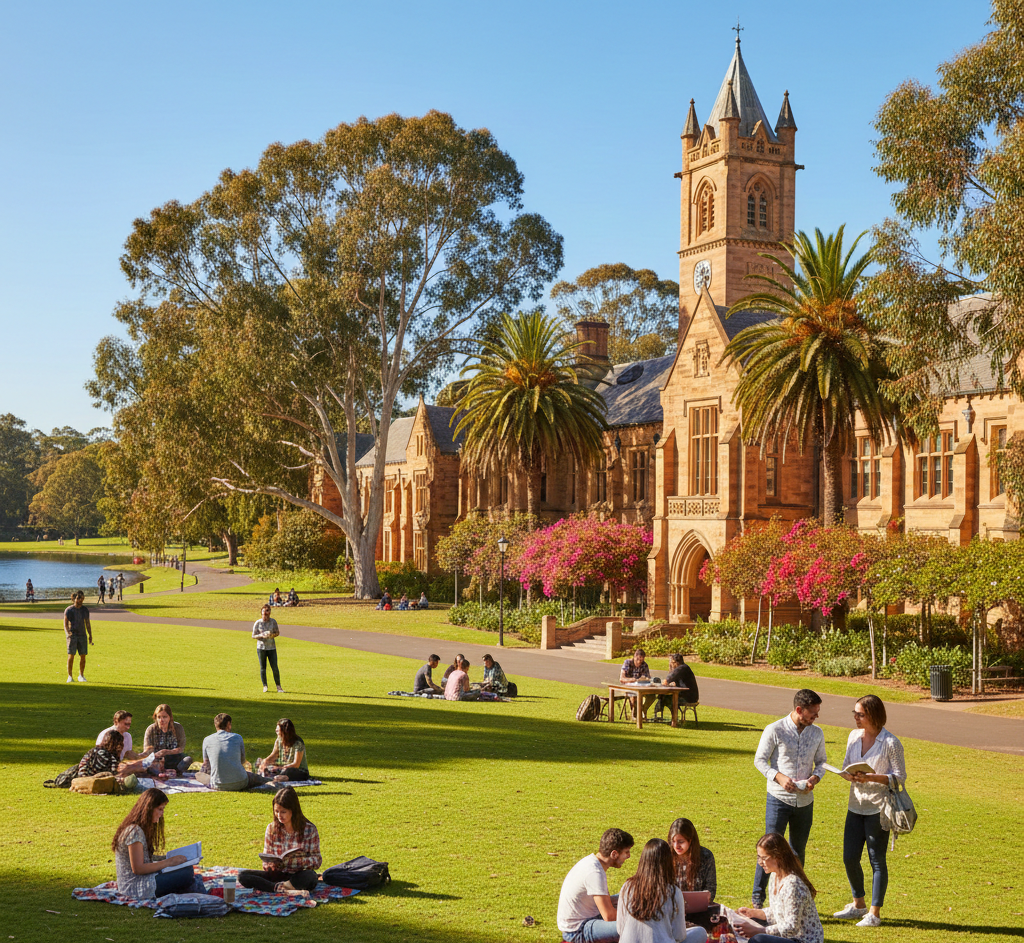
Australia has become one of the world’s most sought-after destinations for international students, and it’s easy to see why. With seven universities ranked in the global top 100, a welcoming multicultural environment, and post-study work opportunities, Australia offers an exceptional return on your educational investment. Whether you’re considering undergraduate, postgraduate, or research programs, this comprehensive guide will walk you through everything you need to know about studying in Australia—from choosing the right university to budgeting for your entire experience.
In this article, you’ll discover the top-ranked Australian universities, get a realistic breakdown of tuition fees and living costs, learn about scholarship opportunities that could fund your education, and find practical tips for making your Australian study dream a reality. Let’s dive into what makes Australia an outstanding choice for your academic journey.
Why Choose Australia for Your Studies?
Australia consistently ranks among the top three destinations for international students worldwide, attracting over 600,000 students annually from more than 190 countries. This popularity isn’t accidental—it’s built on several compelling factors that set Australian education apart.
The Australian education system is globally recognized for its quality and innovation. The Australian Qualifications Framework (AQF) ensures that all degrees meet stringent national standards, giving your qualification international credibility. Australian universities are research powerhouses, contributing groundbreaking discoveries in fields ranging from medical science to environmental sustainability.
💡
Pro Tip
Australia’s post-study work visa allows graduates to stay and work for 2-4 years after completing their degree, depending on their qualification level. This provides invaluable international work experience that significantly boosts your career prospects.
Beyond academics, Australia offers an unparalleled quality of life. You’ll study in cities consistently ranked among the world’s most livable, enjoy a safe and stable environment, and experience a diverse culture that celebrates over 200 languages. The mild climate, stunning natural landscapes, and outdoor lifestyle create a learning environment that balances academic rigor with personal wellbeing.
The practical benefits extend to your career as well. Australian degrees are highly valued by employers globally, and the country’s strong economy provides numerous internship and part-time work opportunities during your studies. International students can work up to 48 hours per fortnight during semester and unlimited hours during breaks, helping offset living costs while gaining professional experience.
Top Universities in Australia for International Students
Australia’s higher education landscape features 43 universities, with several consistently appearing in global top rankings. Understanding your options helps you choose the institution that best aligns with your academic goals and career aspirations.
Group of Eight (Go8) Universities
The Group of Eight represents Australia’s most prestigious research-intensive universities, comparable to the Ivy League in the United States or the Russell Group in the UK.
- The University of Melbourne consistently ranks as Australia’s number one university and sits within the global top 15. Located in the cultural capital of Australia, it excels across all disciplines but particularly in arts, humanities, medicine, and law. The university’s Melbourne Model provides a unique undergraduate structure that emphasizes breadth before specialization.
- Australian National University (ANU) in Canberra holds the distinction of being Australia’s national university and ranks among the global top 30. It’s particularly renowned for politics, international relations, and scientific research. Its location in the nation’s capital provides unique access to government institutions and policy centers.
- The University of Sydney, established in 1850, combines historical prestige with cutting-edge research. Ranking in the global top 20, Sydney excels in engineering, business, and health sciences. Its stunning campus and location in Australia’s largest city offer unmatched cultural and professional opportunities.
- The University of Queensland (UQ) in Brisbane ranks among the world’s top 50 and is recognized for its strength in life sciences, engineering, and business. The subtropical climate and lifestyle in Brisbane appeal to students seeking a more relaxed urban environment without sacrificing academic quality.
- The University of New South Wales (UNSW Sydney) excels in engineering, technology, and business programs. With strong industry partnerships and a reputation for innovation, UNSW consistently ranks in the global top 45 and boasts high graduate employment rates.
Other Leading Universities
- Monash University, Australia’s largest university by enrollment, ranks in the global top 45 and offers exceptional programs in pharmacy, education, and business. Its diverse campuses across Melbourne and international locations in Malaysia and other countries provide unique global perspectives.
- The University of Western Australia (UWA) in Perth combines academic excellence with one of the world’s most beautiful campuses. Ranking in the top 100 globally, UWA is particularly strong in mining engineering, agriculture, and marine science—fields closely tied to Western Australia’s natural resources.
- The University of Adelaide rounds out the Go8 and excels in wine business, health sciences, and engineering. South Australia’s growing reputation as a technology and defense hub creates expanding opportunities for graduates.
Key Takeaway
-
✅
While Go8 universities dominate rankings, many other Australian universities offer specialized programs that may better suit your career goals. Consider program reputation in your specific field, not just overall university rankings.
Specialized and Emerging Universities
- Queensland University of Technology (QUT) in Brisbane emphasizes real-world learning and has built a strong reputation in creative industries, robotics, and business. Its close industry connections ensure students gain practical experience alongside theoretical knowledge.
- University of Technology Sydney (UTS) has rapidly climbed global rankings with its innovative approach to education and impressive new facilities. It’s particularly strong in nursing, engineering, and IT, with curriculum designed in collaboration with industry partners.
- RMIT University in Melbourne excels in design, architecture, and vocational education. Its focus on employability and industry engagement makes it a top choice for students prioritizing career outcomes.
Cost of Studying in Australia: Complete Breakdown
Understanding the full financial picture is crucial when planning your Australian education. Costs vary significantly based on your chosen university, location, program, and lifestyle choices.
Tuition Fees by Program Level
Australian universities charge international students different fees depending on their chosen field of study. For 2025, you can expect the following annual tuition ranges:
- Undergraduate Programs: Tuition fees typically range from AUD $20,000 to AUD $45,000 per year. Arts, humanities, and education programs fall on the lower end (AUD $20,000-$30,000), while business and science programs cost AUD $25,000-$40,000 annually. Engineering and medicine programs command premium fees, often reaching AUD $35,000-$50,000 per year.
- Postgraduate Coursework Programs: Master’s degrees generally cost between AUD $22,000 and AUD $50,000 annually. Business programs, particularly MBA degrees at top universities, can exceed AUD $80,000 for the entire program. However, specialized master’s in education or social work typically cost AUD $25,000-$35,000 per year.
- Research Degrees (PhD): Doctoral programs range from AUD $18,000 to AUD $42,000 annually, though many international PhD students secure scholarships that cover tuition and provide living stipends. Research degrees in laboratory sciences typically cost more than those in humanities.
- Vocational Education and Training (VET): Certificate and diploma programs at TAFE institutions offer more affordable options, ranging from AUD $4,000 to AUD $22,000 per year depending on the qualification level and field.
Living Expenses in Major Cities
The Australian government requires student visa applicants to demonstrate they can cover AUD $24,505 per year for living expenses, plus additional amounts for dependents. However, actual costs vary significantly by city.
- Sydney and Melbourne: Australia’s two largest cities are also the most expensive. Expect to budget AUD $2,000-$3,500 monthly for accommodation, food, transportation, and personal expenses. Shared accommodation in inner suburbs costs AUD $250-$400 weekly, while studio apartments start around AUD $400-$600 weekly.
- Brisbane and Perth: These cities offer a more affordable lifestyle while maintaining excellent amenities. Monthly expenses typically range from AUD $1,800-$2,800. Shared housing costs AUD $180-$300 weekly, with more options available at lower price points than in Sydney or Melbourne.
- Adelaide and Hobart: Smaller capital cities provide the most budget-friendly options, with monthly costs between AUD $1,500-$2,300. Shared accommodation can be found for AUD $150-$250 weekly, and overall living costs run approximately 20% lower than Sydney.
- Canberra: Despite being the national capital, Canberra’s living costs sit in the middle range at AUD $1,800-$2,500 monthly. The city’s excellent public transport and compact size help keep expenses manageable.
Additional Costs to Consider
- Overseas Student Health Cover (OSHC): All international students must maintain health insurance for their entire stay. OSHC costs approximately AUD $450-$600 annually for singles, with higher rates for couples and families.
- Student Visa: The application fee for a student visa (subclass 500) is currently AUD $710. Budget additional funds for health examinations and document certifications required for your application.
- Books and Materials: Depending on your course, expect to spend AUD $500-$1,500 annually on textbooks, course materials, and equipment. Many students reduce these costs by buying used textbooks or using university library resources.
- Transportation: Monthly public transport costs range from AUD $100-$200, with most cities offering student discounts on travel passes. Sydney and Melbourne have extensive public transport networks, while Perth and Brisbane may require a car for some areas.
💡
Pro Tip
Many universities offer interest-free loans to help students purchase textbooks and essential equipment. Ask your university’s student services about these options during orientation.
Scholarships and Financial Aid for International Students
Securing funding can dramatically reduce the financial burden of studying in Australia. Multiple scholarship opportunities exist for international students across various levels of study.
Australian Government Scholarships
- Australia Awards Scholarships: These represent the most prestigious government-funded opportunities, targeting students from developing countries in the Indo-Pacific region. These fully-funded scholarships cover tuition, living expenses, health insurance, and travel costs. The program prioritizes candidates who will contribute to development outcomes in their home countries.
- Research Training Program (RTP) Scholarships: Provide funding for international students undertaking research master’s or doctoral degrees. These scholarships cover tuition fees and provide a living stipend of approximately AUD $33,000 annually. Competition is intense, with selections based on academic merit and research potential.
- Destination Australia Scholarships: Offer AUD $15,000 annually to students studying in regional Australia. These scholarships aim to promote regional education and can be combined with other funding sources.
University-Specific Scholarships
Most Australian universities offer substantial scholarship programs for international students. Here’s what you should know:
- University of Melbourne: Provides hundreds of graduate research scholarships, including the Melbourne Research Scholarship covering full tuition plus a living allowance. The Chancellor’s Scholarship offers 50% tuition reduction for exceptional undergraduate international students.
- Australian National University: Offers merit-based scholarships ranging from 10% to 50% tuition reduction for undergraduate and postgraduate coursework students. The ANU Chancellor’s International Scholarship provides a full tuition waiver plus allowance.
- The University of Sydney: Features the Vice-Chancellor’s International Scholarships Scheme, awarding amounts from AUD $5,000 to full tuition coverage based on academic excellence. They also offer country-specific scholarships for students from partner nations.
- Monash University: Provides numerous international merit scholarships worth AUD $10,000 per year, automatically considered when you apply. Their Faculty-specific scholarships offer additional funding opportunities in fields like engineering and business.
External Scholarships and Funding
- Endeavour Postgraduate Leadership Awards: Support international students pursuing postgraduate study or research in Australia, providing up to AUD $272,500 for doctoral degrees and AUD $140,500 for master’s degrees.
- International Organizations: Many students secure funding through organizations like the Fulbright Program, Commonwealth Scholarships, or country-specific government scholarship schemes. Check with your home country’s education ministry for opportunities.
Key Takeaway
-
✅
Start your scholarship search at least 12-18 months before your intended start date. Many prestigious scholarships have early deadlines, sometimes a full year before the academic program begins.
Admission Requirements and Application Process
Understanding admission requirements helps you prepare a competitive application and increases your chances of acceptance to your preferred university.
Academic Requirements
Australian universities assess international applicants based on their home country’s education system. Generally, you’ll need:
- Undergraduate Entry: Completion of secondary education equivalent to Australian Year 12 with grades meeting specific program requirements. For prestigious universities and competitive programs, you’ll typically need grades equivalent to an Australian ATAR of 80-99 (roughly 75-95% in most systems).
- Postgraduate Entry: A bachelor’s degree from a recognized institution with minimum grade requirements. Most programs require a credit average (65-70%) or higher. Some specialized programs like MBA or medical courses may require relevant work experience and additional testing (GMAT, GRE).
- Research Degrees: A strong academic record in relevant fields, research proposal, and often a supervisor willing to oversee your project before formal admission.
English Language Proficiency
You must demonstrate English proficiency through accepted tests unless you’ve completed previous education in English:
- IELTS Academic: Minimum overall score of 6.5 (with no band below 6.0) for most undergraduate programs; 6.5-7.0 for postgraduate programs
- TOEFL iBT: Typically 79-90+ depending on program
- PTE Academic: Usually 58-65+
- Cambridge C1 Advanced: Generally 176-185+
Some universities offer conditional admission with lower scores if you complete an English language bridging program.
Application Process Timeline
12-18 Months
Before Start: Research, English Tests, Scholarships
9-12 Months
Before Start: Take English Tests, Request Transcripts, Apply for Scholarships
6-9 Months
Before Start: Submit University Applications, Apply for Scholarships
3-6 Months
Before Start: Receive Offers, Accept, Arrange Accommodation, Apply for Visa
1-3 Months
Before Start: Finalize Visa, Book Flights, Attend Orientations
⚠️
Important
Some competitive programs, particularly medical and veterinary science, have specific application portals and earlier deadlines. Always check individual program requirements well in advance.
Required Documents
Prepare these essential documents for your application:
- ✅Certified copies of academic transcripts and certificates
- ✅English language test results
- ✅Statement of purpose or personal statement
- ✅Curriculum vitae or resume
- ✅Two or more academic reference letters
- ✅Portfolio (for creative programs)
- ✅Research proposal (for research degrees)
- ✅Passport copy
- ✅Evidence of financial capacity
Student Life and Support Services in Australia
Australian universities pride themselves on comprehensive support systems designed to help international students succeed academically and personally.
On-Campus Resources
- Academic Support: Universities provide writing centers, peer tutoring, study skills workshops, and subject-specific help sessions. Many offer free consultations where you can get feedback on assignments before submission. Academic advisors help you navigate course selections and degree planning.
- Career Services: Most universities maintain dedicated career centers offering resume reviews, interview preparation, job search strategies, and connections to employers through career fairs and networking events. Many also provide industry-specific career advisors who understand the unique pathways in different fields.
- Mental Health and Wellbeing: Universities recognize that studying abroad can be challenging and provide free or low-cost counseling services, mental health workshops, and peer support programs. Many campuses have meditation rooms, fitness facilities, and wellbeing programs integrated into student life.
- International Student Offices: These specialized departments help with visa matters, cultural adjustment, forming social connections, and navigating Australian systems. They organize orientation programs, cultural activities, and practical workshops on topics like opening bank accounts and understanding local laws.
Accommodation Options
- On-Campus Residential Colleges: Traditional college accommodation provides meals, organized activities, and instant community. Costs range from AUD $350-$700 weekly depending on the university and facilities. Places are limited and typically require early application.
- University-Managed Apartments: Modern studio or shared apartments on or near campus cost AUD $250-$500 weekly. These offer independence while maintaining proximity to classes and campus facilities.
- Private Rentals: The most common option involves renting shared houses or apartments with other students. Websites like Domain, Realestate.com.au, and Flatmates.com.au help you find accommodation. Budget AUD $150-$400 weekly depending on location and whether you choose a shared room or private room.
- Homestay: Living with an Australian family provides cultural immersion and included meals. Costs typically range from AUD $250-$350 weekly and offer excellent English practice and local insights.
Working While Studying
International students can work up to 48 hours per fortnight during semester and unlimited hours during official breaks. Common jobs include:
AUD $20-$25
Retail positions
AUD $22-$28
Hospitality work
AUD $25-$40
Tutoring
AUD $25-$30
On-campus jobs
💡
Pro Tip
Australian law requires all workers to have a Tax File Number (TFN). Apply for yours online through the Australian Taxation Office within your first few weeks of arrival—it’s free and takes about 10 minutes.
Tips for a Successful Application
Strengthen your application with these strategic approaches that admission officers value.
Craft a Compelling Personal Statement
Your statement of purpose should tell your unique story, not repeat information from your transcript. Explain specific experiences that sparked your interest in the field, demonstrate knowledge of your chosen program’s strengths, and articulate clear career goals. Universities want students who will contribute to campus life and their field, so highlight relevant extracurricular activities, research experience, or community involvement.
Connect your past experiences to future goals through concrete examples. Rather than stating “I’m passionate about environmental science,” describe a specific project or experience that ignited this passion and explain how the program’s research facilities or faculty expertise will help you address particular environmental challenges.
Secure Strong Letters of Recommendation
Choose recommenders who know your work well and can provide specific examples of your abilities. Academic references should come from professors in relevant fields who can speak to your intellectual capabilities and research potential. Professional references work well for postgraduate applications where work experience is relevant.
Provide your recommenders with your CV, transcripts, and a brief overview of why you’re applying to specific programs. This helps them write detailed, targeted letters rather than generic recommendations.
Demonstrate Financial Capacity
Student visa requirements mandate proof that you can cover tuition and living expenses. Prepare bank statements showing sufficient funds (approximately AUD $30,000-$40,000 for the first year), scholarship award letters if applicable, or documentation of loan approval. Some visa officers may require these funds to have been held for three months.
Apply Early
Universities often review applications on a rolling basis, meaning early applicants have better chances of acceptance and scholarship consideration. Popular programs fill quickly, particularly for February/March intake. Submitting applications 6-9 months before your intended start date demonstrates organization and serious interest.
Research Your Program Thoroughly
Demonstrate genuine interest by referencing specific courses, faculty members, research centers, or unique program features in your application materials. Universities appreciate applicants who understand what makes their program distinctive and can articulate why it’s the right fit.
Post-Study Work Opportunities and Immigration Pathways
Australia’s post-study work visa (Temporary Graduate visa, subclass 485) allows graduates to remain and work after completing their degrees, providing valuable international experience and potential pathways to permanent residency.
Temporary Graduate Visa Options
- The Graduate Work stream is available to graduates with skills and qualifications in occupations on the Medium and Long-term Strategic Skills List (MLTSSL). This visa lasts 18 months and requires relevant skills assessment from designated authorities.
- The Post-Study Work stream offers 2-4 years depending on your qualification level. Bachelor’s and master’s degree graduates receive two years, master’s by research graduates get three years, and doctoral degree holders receive four years. You must have studied for at least two academic years in Australia to qualify.
Requirements include:
- ✅Australian degree from a registered education provider
- ✅Application within six months of course completion
- ✅Age under 50 at time of application
- ✅Meeting health and character requirements
- ✅Adequate health insurance
Career Prospects for International Graduates
Australian qualifications are highly valued globally, and many graduates find excellent opportunities both in Australia and internationally. Fields with particularly strong demand include:
- Healthcare and aged care
- Engineering and technology
- Accounting and finance
- Education and childcare
- Hospitality and tourism management
Australia’s economy consistently demonstrates resilience, with unemployment rates generally lower than many OECD countries. The minimum wage in Australia (AUD $23.23 per hour as of 2024) is among the world’s highest, ensuring decent living standards even in entry-level positions.
Pathways to Permanent Residency
Many international students transition to permanent residency through skilled migration programs. The Skilled Independent visa (subclass 189) and Skilled Nominated visa (subclass 190) are popular pathways requiring:
- Occupation on relevant skilled occupation lists
- Successful skills assessment
- Competent English proficiency
- Points threshold achievement (currently 65+ points)
Studying in regional Australia provides additional migration points and access to specific regional visas with more favorable conditions. States also nominate skilled workers through their own programs, offering alternative pathways to permanent residency.
⚠️
Important
Immigration policies change regularly. Always check the Department of Home Affairs website for current requirements and consult a registered migration agent for personalized advice.
Frequently Asked Questions
Is studying in Australia expensive compared to other countries?
+
Australia’s tuition fees are comparable to the UK and slightly higher than Canada, but generally lower than private US universities. When you factor in Australia’s post-study work opportunities, high minimum wages allowing part-time work during studies, and quality of life, the investment often provides excellent value. Additionally, numerous scholarships can significantly reduce costs for qualified international students.
Can I work while studying in Australia on a student visa?
+
Yes, international students on student visas can work up to 48 hours per fortnight during semester periods and unlimited hours during official semester breaks. This helps offset living costs and provides valuable work experience. Australian minimum wage laws ensure you’ll earn fair compensation, typically AUD $20-$30 per hour depending on the industry and your experience.
How do Australian degrees compare globally?
+
Australian degrees are highly respected worldwide due to the Australian Qualifications Framework’s rigorous standards. Seven Australian universities rank in the global top 100, and Australian research makes significant contributions across all fields. Employers internationally recognize Australian qualifications, and many professional bodies worldwide accept Australian degrees for licensure and membership.
What’s the best time to start university in Australia?
+
Australian universities typically have two main intake periods: Semester 1 (February/March) and Semester 2 (July/August). Semester 1 is considered the main intake with more course options and scholarship opportunities. However, Semester 2 intake works well for students completing Northern Hemisphere academic years in June or those needing extra preparation time. Some programs only offer Semester 1 entry, so check specific course requirements.
Do I need to speak perfect English to study in Australia?
+
While you need to meet minimum English proficiency requirements (typically IELTS 6.5 overall), you don’t need perfect English. Australian universities provide extensive language support services, including academic writing centers and English language workshops. Many international students improve their English significantly during their studies through immersion in the English-speaking environment. Most universities also offer English language bridging programs if you narrowly miss entry requirements.
Can I bring my family while studying in Australia?
+
Yes, you can include your spouse/partner and dependent children on your student visa application. However, you must demonstrate additional financial capacity (currently an extra AUD $7,362 annually for your partner and AUD $3,152 for each child). Your dependents can also access education and work rights, with your partner able to work unlimited hours if you’re enrolled in a postgraduate research degree.
Are there age restrictions for international students?
+
No, Australian universities welcome students of all ages for most programs. While some scholarships may have age limits, the universities themselves don’t discriminate based on age for admission decisions. Many mature-age international students successfully pursue Australian qualifications, bringing valuable life experience to their studies.
What happens if I fail a subject or struggle academically?
+
Australian universities provide comprehensive academic support services including tutoring, study skills workshops, and counseling. If you’re struggling, contact your course coordinator or international student office immediately. Most universities offer supplementary exams or special consideration for students experiencing difficulties. However, your student visa requires you to maintain satisfactory academic progress, so address any concerns early rather than waiting until they become serious problems.
Conclusion
Studying in Australia offers a transformative educational experience that combines academic excellence with quality of life, cultural diversity, and strong career prospects. The investment in an Australian education pays dividends through globally recognized qualifications, post-study work opportunities, and the personal growth that comes from international study.
Key takeaways from this guide:
-
✅
Australia hosts seven universities in the global top 100, providing world-class education across all disciplines -
✅
Annual tuition ranges from AUD $20,000-$50,000 depending on your program, with living costs between AUD $1,500-$3,500 monthly varying by city -
✅
Numerous scholarship opportunities exist at government, university, and external levels that can substantially reduce your costs -
✅
Post-study work visas allow 2-4 years of work experience after graduation, with pathways to permanent residency for those interested -
✅
Starting your research and applications 12-18 months before your intended start date maximizes your chances of acceptance and scholarship success
The application process may seem complex, but breaking it into manageable steps makes it entirely achievable. Focus on building a strong academic record, demonstrating genuine interest in your chosen field, and preparing thorough applications. Remember that Australian universities actively welcome international students and provide extensive support systems to ensure your success.
Ready to begin your Australian education journey? Start by identifying 3-5 universities that offer programs aligned with your career goals, check their specific entry requirements, and begin preparing your English proficiency test. The investment of time and resources you make today will shape your professional trajectory and open doors to global opportunities.
What aspect of studying in Australia interests you most? Whether it’s the academic reputation, lifestyle, or career opportunities, taking that first step toward your application brings you closer to an extraordinary educational experience.
Related Articles
How to Write a Winning Scholarship Essay
Learn the exact formula scholarship winners use to craft compelling essays that stand out.
FAFSA Guide for Nursing Students
Step-by-step instructions for maximizing your federal financial aid as a nursing student.
BSN vs ADN: Which Path is Right for You?
Compare the two main nursing degree paths to find which one fits your goals and budget.

Leave a Reply